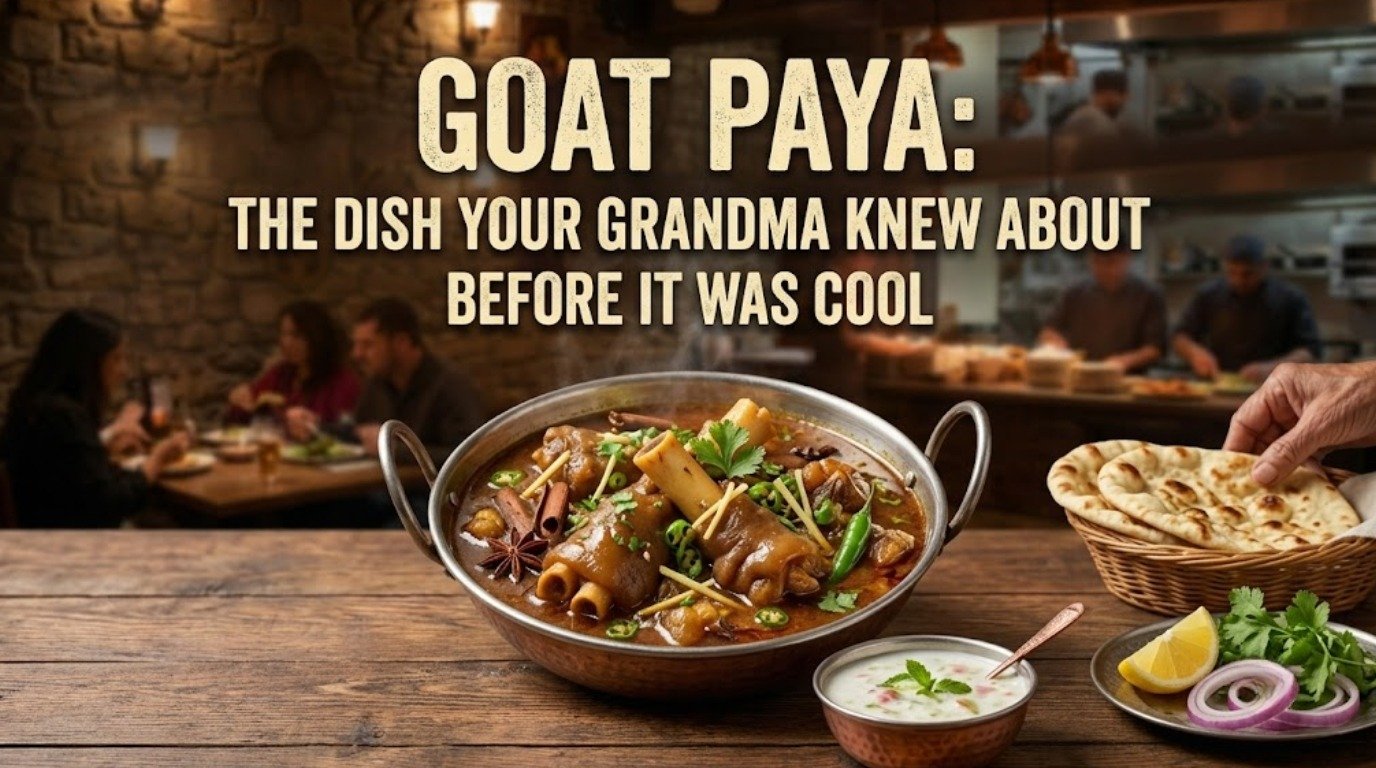
Let’s talk about a dish that doesn’t need social media to prove itself: Goat Paya. This slow-simmered trotter curry has been quietly nourishing families for generations, long before “bone broth” became a wellness buzzword plastered across every health-food brand’s packaging. Turns out our grandparents were onto something the whole time — they just called it dinner, not a superfood trend.
What Exactly Is Paya?
“Paya” refers to the trotters (feet) of the goat, and the dish is a slow-cooked curry built around them. It sounds unfamiliar to a lot of Western palates at first, but the concept isn’t actually that different from things people already love — it’s the same idea behind rich bone broths, oxtail stew, or any dish that gets its depth of flavor from long, slow cooking with bone-in cuts.
The trotters are simmered for hours — sometimes upward of six to eight hours — along with a blend of warming spices like ginger, garlic, turmeric, and garam masala. Over that long cooking time, the collagen and marrow inside the bones slowly break down and dissolve into the broth, creating a thick, deeply savory, almost silky texture that’s genuinely hard to replicate any other way.
A Dish With Real Tradition Behind It
Paya has deep roots across South Asian cuisine, traditionally eaten for breakfast, particularly on special occasions or weekends when families had the time to let it simmer properly. It’s considered a labor of love in a lot of households — not something you’d rush on a busy weeknight, but a dish reserved for when there’s time to do it right.
In many South Asian communities, paya has also long been associated with recovery and nourishment. New mothers, people recovering from illness, or anyone who needed a little extra strength were traditionally given paya, based on the belief that its rich, nutrient-dense broth had genuine restorative properties. Modern nutrition science has actually caught up with a lot of that tradition — the collagen and gelatin released during that long cooking process are exactly what’s marketed today as the benefits of “bone broth.”
Why It’s Worth Trying (Even If You’re Skeptical)
We get it — trotters aren’t exactly a familiar cut of meat for a lot of people, and it’s completely normal to feel a little hesitant before trying it for the first time. But here’s the thing: the flavor has almost nothing to do with what you might be imagining. The broth is rich, deeply savory, and packed with warming spice — closer in spirit to a comforting stew than anything unusual or intimidating.
The texture of the meat itself is soft and gelatinous rather than chewy, having spent hours breaking down over low heat. And the broth, thickened naturally from all that collagen, has a silky quality that’s genuinely satisfying, especially scooped up with warm naan.
Why It’s Not Really a “Trend” Dish
Unlike a lot of food that gains popularity because it photographs well or fits a viral format, paya has never needed either of those things to earn its place on South Asian tables. It’s stuck around for generations purely because it’s genuinely good, genuinely nourishing, and genuinely worth the time it takes to make properly.
That’s exactly why we think it deserves more attention outside of the communities that have always known about it. While plenty of restaurants are chasing the next trending dish, paya has quietly been the real deal the entire time — patient, unglamorous, and completely satisfying.
How to Order It
Paya is traditionally eaten with naan, torn into pieces and used to scoop up the rich broth along with tender bits of meat. It’s a slower, more involved eating experience than something like a quick kabab — plan to take your time with it, ideally with naan on standby the entire meal.
If you’re new to it, we’d suggest going in with an open mind and comparing it mentally to dishes you already love, like a rich oxtail stew or a deeply reduced bone broth soup. The flavor profile is more familiar than the name might suggest.
Some Things Don’t Need to Go Viral
Paya was doing its thing long before wellness influencers started charging for bottled bone broth. If you grew up with it, this is your nostalgia dish. If you’ve never tried it, consider this your invitation to see what the fuss was always about — no trend cycle required.
Come taste tradition, not a trend. Order Goat Paya →
Faq's
What is Goat Paya?
Goat Paya is a traditional Pakistani and South Asian curry made by slow-cooking goat trotters with aromatic spices for several hours. The long cooking process creates a rich, flavorful broth that’s traditionally enjoyed with fresh naan.
What does Goat Paya taste like?
Goat Paya has a deeply savory, slow-simmered flavor with warming spices like ginger, garlic, turmeric, and garam masala. The broth is rich and silky, similar to a well-made bone broth or oxtail stew.
Is Goat Paya healthy?
Goat Paya is naturally rich in collagen, gelatin, and minerals released during slow cooking. While it’s best enjoyed as part of a balanced diet, it’s traditionally valued in South Asian cuisine as a nourishing comfort food.
Is Goat Paya spicy?
Goat Paya is flavorful and aromatic with mild to medium spice. It emphasizes depth of flavor rather than intense heat.
What should I eat with Goat Paya?
Goat Paya is traditionally served with fresh naan, which is perfect for dipping into the rich broth. Many guests also enjoy it with tandoori naan or plain naan.
Where can I get authentic Goat Paya in Morton Grove, IL?
You can enjoy authentic Goat Paya at OMG Nafisa’s Kitchen in Morton Grove, IL, where it’s prepared using traditional Pakistani recipes and slow-cooked for rich, authentic flavor.
Where can I find Pakistani Goat Paya near Skokie, Niles, or Glenview?
OMG Nafisa’s Kitchen in Morton Grove welcomes guests from Skokie, Niles, Glenview, Des Plaines, Lincolnwood, and surrounding Chicago suburbs looking for authentic Pakistani cuisine, including Goat Paya.
Is Goat Paya available for dine-in, takeout, and delivery?
Yes. Goat Paya is available for dine-in, takeout, and delivery from OMG Nafisa’s Kitchen, subject to availability.
What are OMG Nafisa's Kitchen's restaurant hours?
OMG Nafisa’s Kitchen is open throughout the week for dine-in, takeout, and delivery. For today’s hours and holiday schedules, please check our Google Business Profile or contact the restaurant before visiting.
When is the best time to order Goat Paya?
Goat Paya is perfect for lunch or dinner and is especially popular on weekends. Because it’s slow-cooked for hours, it’s one of the signature traditional dishes at OMG Nafisa’s Kitchen.
Is OMG Nafisa's Kitchen a halal restaurant in Morton Grove?
Yes. OMG Nafisa’s Kitchen proudly serves halal Pakistani, Indian, and Indo-Chinese cuisine in Morton Grove, Illinois.