Brunch Specials OMG Nafisa's Kitchen Pakistani Cuisine
Spice Levels Made Simple: How to Order Mild, Medium, or Hot Pakistani-Indian Food Confidently
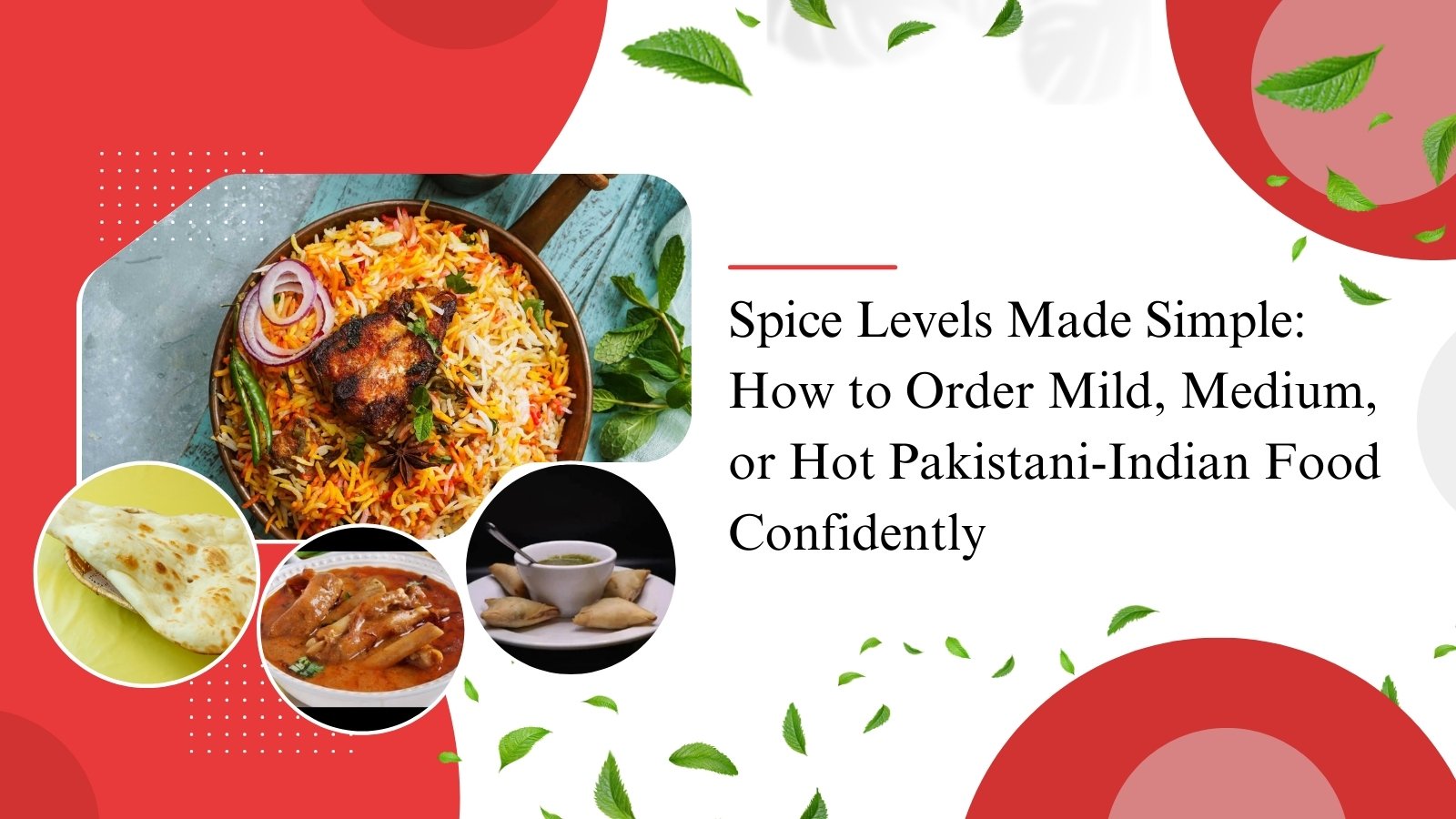
One of the most common worries people have before trying Pakistani or Indo-Pak food is simple: “Is it going to be too spicy?” If you didn’t grow up eating this cuisine, it can be hard to predict heat from a dish name. And because “spice” can mean both flavor and heat, it’s easy to feel unsure before ordering.
At OMG Nafisa’s Kitchen, we see every kind of spice comfort level—from guests who want no heat at all to guests who love a real kick. The goal isn’t to prove how spicy you can eat. The goal is to order something you’ll truly enjoy. This guide explains what spice levels usually mean, how to choose dishes that match your taste, and how to build a balanced meal even if you’re sensitive to heat.
“Spice” Isn’t One Thing: Flavor vs. Heat
In South Asian cooking, spices do a lot of jobs. Some add aroma, some add warmth, some add brightness, and some add heat.
A simple definition: Flavor spices create depth and aroma. Heat spices create burn.
This is why a dish can be richly spiced and still mild. It can taste bold without hurting your mouth.
What Mild, Medium, and Hot Usually Mean
Restaurants may define spice levels slightly differently, but the general experience is similar:
| Spice level | What it feels like | Who it’s best for |
| Mild | Little to no burn, still flavorful | New to the cuisine, heat-sensitive diners |
| Medium | Gentle warmth that builds | People who enjoy a little heat |
| Hot | Noticeable burn and lingering heat | Spice lovers who want intensity |
If you’re unsure, mild or medium is almost always the best first step. You can always go hotter next time once you know what your comfort level feels like in this cuisine.
Choose by Flavor Style First (Not by Name)
Instead of guessing heat based on the dish name, start with the style of flavor you usually enjoy. This makes ordering much easier.
If you like creamy comfort
Creamy dishes tend to feel smoother and calmer, even when they’re well-seasoned. They’re often a safe place to start if you’re spice-sensitive.
If you like tangy and savory
Tomato-onion masala dishes tend to be bold and satisfying. They can be mild, medium, or hot, but the flavor is usually lively and savory rather than heavy.
If you like grilled, smoky flavors
Kebabs and grilled items often feel straightforward and familiar—especially if you enjoy BBQ-style foods. The seasoning is aromatic, and heat is often easier to manage than in some sauces.
If you like hearty, slow-cooked comfort
Stews and slow-simmered dishes can feel warming and filling. They’re often rich in flavor, but not necessarily high in heat.
A Practical “Heat-Safe” Ordering Strategy
If you’re nervous about spice but still want to explore Pakistani/Indo-Pak flavors, try this simple approach:
1 mild main + 1 neutral base + 1 balancing side
- Mild main: choose something creamy, hearty, or grilled
- Neutral base: rice or bread helps soften intensity
- Balancing side: something cooling or fresh can make the meal feel calmer
This strategy works well because it gives you control. Even if the dish has more warmth than you expected, rice and bread help balance each bite.
How to Cool Down a Meal (If It’s Hotter Than Expected)
If your dish ends up spicier than you wanted, you don’t need to “push through.” South Asian meals are often eaten with natural balancing foods.
A few simple ways to soften heat:
- Take a bite of rice between spicy bites
- Use bread to scoop smaller amounts of sauce
- Choose cooling items (often yogurt-based) if available
- Sip a cooling drink rather than ice water (ice water can sometimes make heat feel sharper)
The goal is balance, not suffering.
Ordering for a Group With Different Spice Preferences
Group ordering can be stressful when everyone has different spice tolerance. A simple solution is to order variety:
- One mild dish (comfort base for everyone)
- One medium dish (for people who want warmth)
- One grilled item (usually a crowd-pleaser)
- Rice + bread (so everyone can build their own plate)
This is how many families eat South Asian food at home—shared table, shared variety, personal comfort.
FAQs About Spice Levels at OMG Nafisa’s Kitchen
People often ask whether mild dishes are still “authentic.” Yes. Many traditional Pakistani and South Asian dishes are naturally mild, and even bolder dishes can be prepared at a comfortable heat level while still keeping their real flavor. Authenticity is more about balance, aroma, and cooking technique than it is about burning heat.
Another common question is how to tell if something will be spicy by reading the menu. The honest answer is that it’s not always obvious. That’s why choosing by flavor style—creamy, tangy, grilled, or hearty—tends to work better than guessing based on the dish name alone.
Guests also ask what to do if they want medium but are unsure. A practical first step is to order medium with a neutral base like rice and bread. That way, you can enjoy the warmth without feeling overwhelmed.
Confidence Comes From One Good First Order
Spice doesn’t have to be intimidating. Once you understand the difference between flavor and heat—and once you know your comfort level—ordering becomes easy. Start with a dish style you already like, pick mild or medium, and build a balanced plate with rice or bread. After that first meal, your next choice will feel much simpler.
If you’d like, you can explore OMG Nafisa’s Kitchen’s menu whenever it’s convenient and use this guide to order at your own spice comfort level.